
for educational purposes
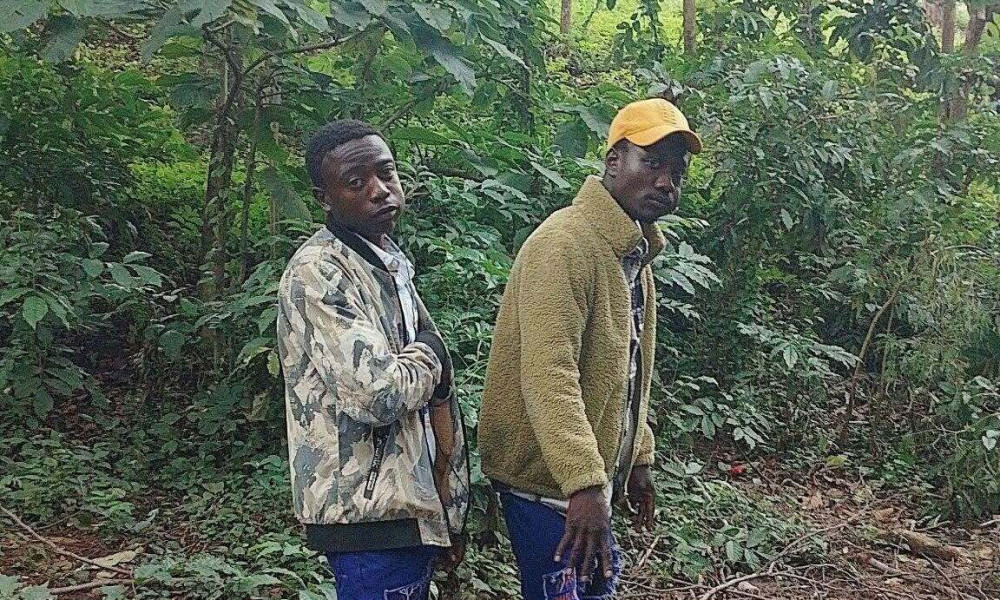
My Travel Story
Impact on my education and career
This project directly strengthens my MSc training in Veterinary Microbiology by pushing me beyond classroom theory into real-world application of bacteriology, molecular methods, and biostatistics. Working on genomic characterization and transmission dynamics of zoonotic Campylobacter and diarrheagenic E. coli at the wildlife–livestock–human water interface builds a niche expertise that is highly relevant to emerging One Health and antimicrobial resistance priorities.nafsa
Educationally, it gives me a rigorous platform to refine laboratory skills (culture, biochemical identification, PCR, MLST, phylogenetics) while also strengthening my scientific communication through writing, presentations, and data interpretation. Professionally, this combination positions me for research and applied microbiology roles beyond traditional veterinary surgery, including surveillance programs, public health laboratories, and collaborative One Health initiatives across government, NGOs, and industry.nafsa
By integrating my civil engineering project management experience, I can run the study as a “mini‑project”: planning fieldwork, coordinating stakeholders, managing budgets and timelines, and translating technical findings into actionable recommendations, which are all core skills for leadership roles in research and consultancy. This project therefore serves as both an academic milestone and a demonstrable portfolio piece that shows I can design, implement, and deliver complex, multidisciplinary work.transitionsabroad+1
How I will make a difference in the community
At community level, the project tackles very practical questions: how water sources shared by wildlife, livestock, and people can become reservoirs for zoonotic pathogens, and what that means for diarrhoeal disease, food safety, and livelihoods around places like Amboseli. By mapping transmission pathways and resistance patterns, I can help local health and veterinary officers design more targeted prevention strategies, such as safer water use practices, better animal management around shared water points, and more rational use of antibiotics in animals.nafsa
The findings can feed into simple, culturally sensitive education materials for communities, similar to the cholera awareness resources I have already helped develop, but now grounded in new data from this specific ecosystem. I also intend to share results with Kenyan institutions and regional networks so that the evidence generated locally contributes to wider policies on antimicrobial resistance and One Health surveillance, rather than remaining only in a thesis. In this way, the project becomes a tool for empowering communities with information, guiding decision‑makers with evidence, and improving health outcomes across humans, livestock, and wildlife.nafsa
Why I am passionate about this project
My passion comes from the intersection of three things I care deeply about: animals, public health, and research that actually solves problems on the ground. Growing from a biology background into veterinary microbiology, I have always been drawn to understanding how invisible organisms—bacteria, resistance genes, environmental pathogens—shape visible realities like diarrhoeal disease, food insecurity, and economic stress in households.Memory
Working on this project allows me to use advanced tools like genomics and molecular epidemiology not as abstract technology, but as instruments to answer questions that matter to families living around water points and grazing lands in Kenya. It also connects strongly with my interest in building digital tools, such as AMR dashboards and web apps, to visualize resistance trends and make complex data understandable to non‑specialists. I am passionate about this project because it does not force me to choose between science and service: it lets me be a researcher, a communicator, and a problem‑solver at the same time.nafsa
Why I chose this destination
I chose the Amboseli wildlife–livestock–human water interface because it is a natural laboratory where many of Kenya’s One Health challenges are concentrated in a small, highly interactive space. Here, pastoralist communities, domestic animals, wildlife, and seasonal tourism activities all converge around limited water sources, creating intense contact patterns that can drive cross‑species transmission of enteric pathogens.nafsa
Studying this destination allows me to capture a realistic picture of how environmental, social, and ecological forces combine to move bacteria and resistance genes across species boundaries, rather than looking at humans or animals in isolation. It also aligns with national and global priorities that emphasize hotspot ecosystems as key sites for surveillance and intervention, making my findings more relevant to policy and future collaborative projects. For me, this destination is not just a field site; it is a place where science and community life intersect in a way that can teach us how to design smarter, context‑specific solutions.transitionsabroad+1
What makes this meaningful for me
This project is meaningful because it integrates almost every strand of my multidisciplinary journey into one coherent story: biological training, veterinary microbiology, civil engineering project skills, data analysis, web tools, and a strong desire to serve communities. It shows that science does not have to stay inside laboratories and journals; it can travel to water points, farms, and homes, and come back as knowledge that changes how we protect health and manage resources.nafsa
On a personal level, it represents a transition from “student” to “contributor”: instead of only learning from textbooks, I am generating data, building collaborations, and creating resources that others can use. It is also meaningful because it opens doors—into advanced research, into innovative digital health tools, and into leadership roles where I can help shape how One Health and AMR are tackled in Kenya and beyond. Ultimately, this project is my way of turning passion and potential into tangible impact, and that is why I am committed to it
Adventure Registry
-
books, trees, smart camera
200anonymous- Granted
-
Campaign Ended
$ 0 AUD
Total Donation Received-
0%
Funded -
$ 3,100 AUD
Goal Amount -
0
Days Left
-
-
Cost Calculator
-
Books/ Text and Study Materials
$ 100
-
Application/ Deposit Fee
$ 200
-
Immunization/ Vaccine
$ 400
-
Program Fee
$ 2,000
-
Special Courses/ Language Programs
$ 200
-
Luggage and Equipment
$ 200
-
-
Donor Rewards
-
20 AUD
Zoom webinar or Google Meet session where high‑level supporters get a deep dive into the project, ask questions, and see
-